 (alpha)
- Artists & Events
- Artists & Events
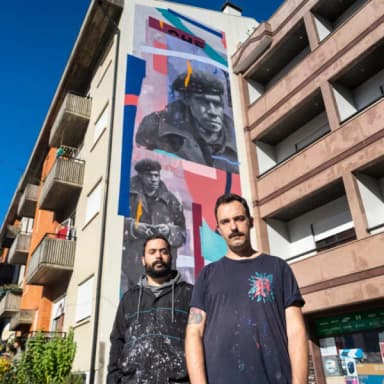
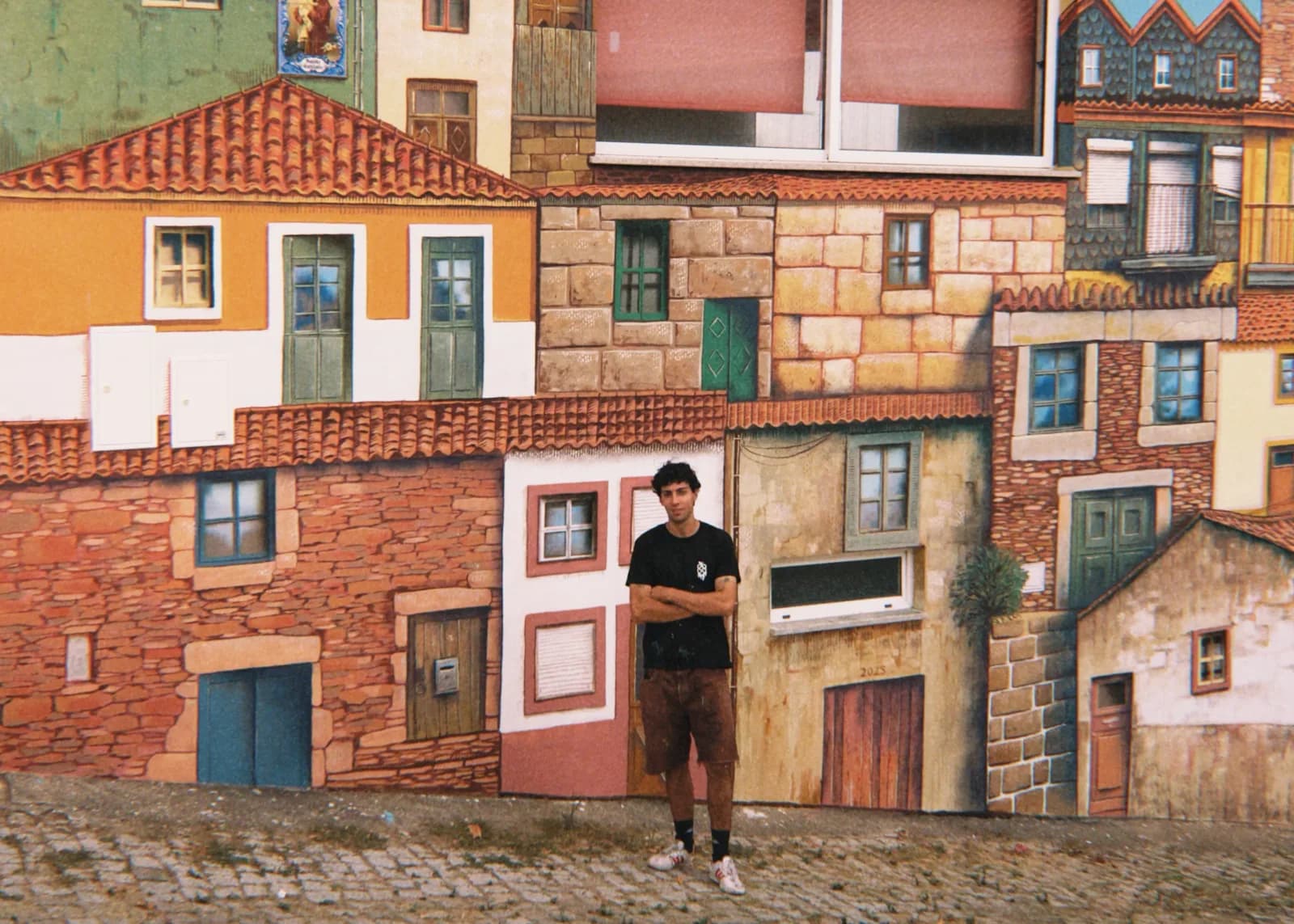
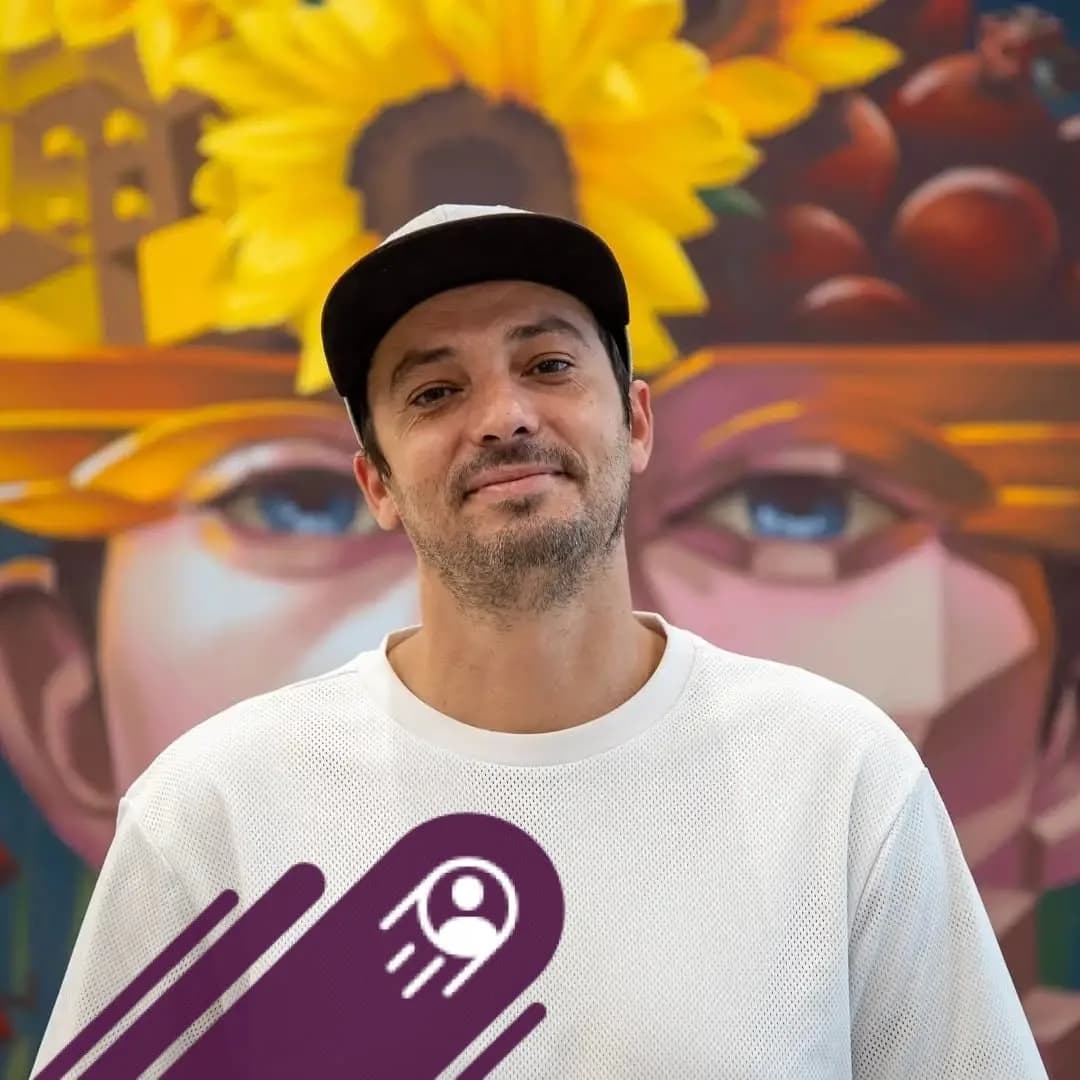
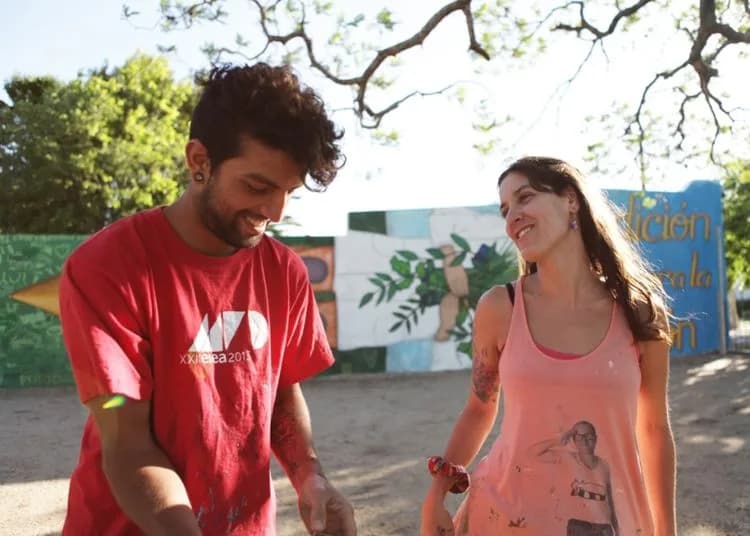
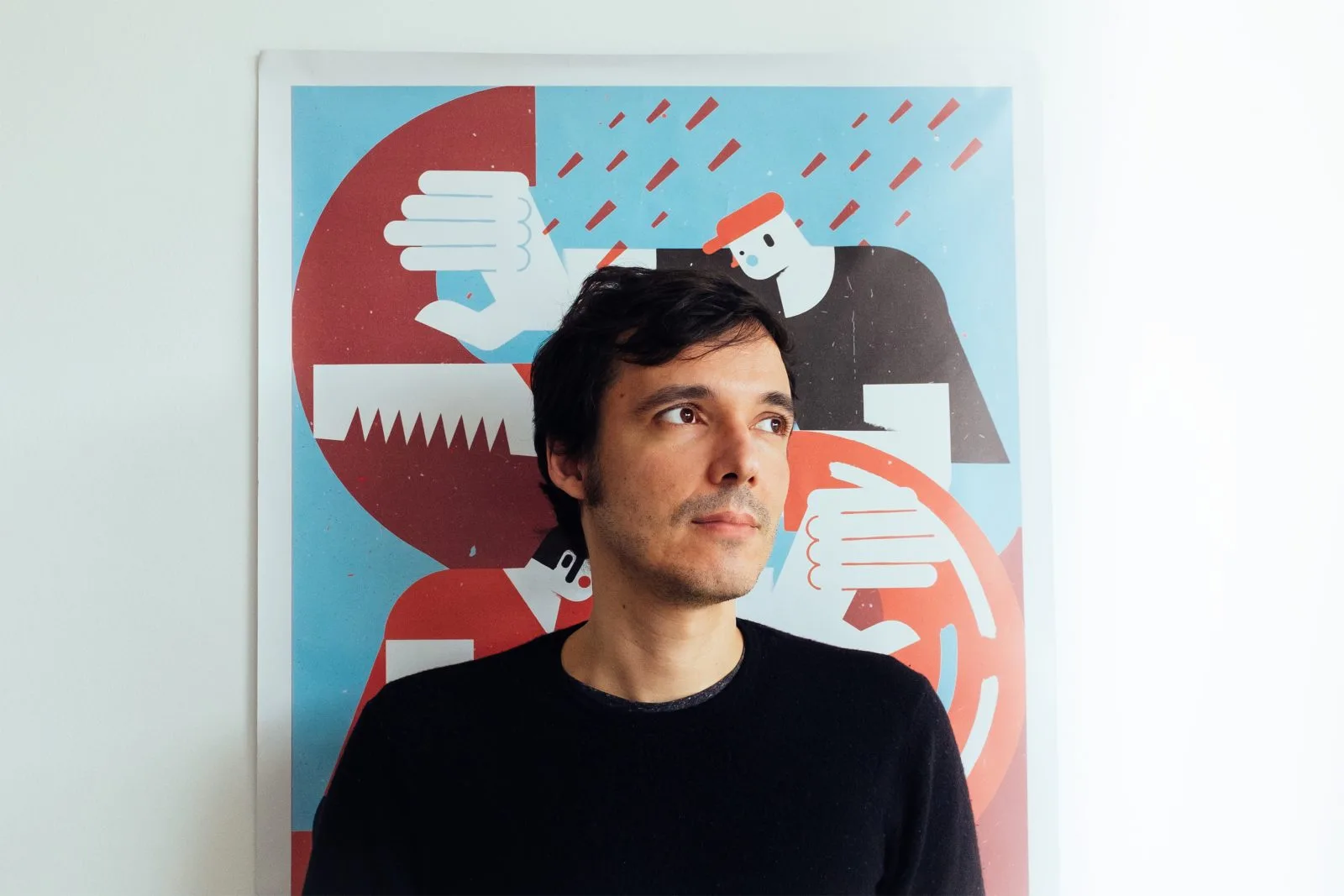
Projeto Ruído is a Portuguese urban art duo — Draw (Frederico Soares Campos, b. 1988) and Contra (Rodrigo Guinea Gonçalves, b. 1984) — both out of graffiti, working in a collaged, archival register. A Ruído wall tends to look like a page from a scrapbook blown up to building scale: photographs, printed ephemera, lettering and objects laid over one another, with the joins left visible.
Draw also works under his own name, and his solo murals are catalogued here as Frederico Draw.
Their largest body of work is Murais de Liberdade, made for the fiftieth anniversary of the 25th of April 1974 with the support of Turismo de Portugal: fourteen murals in fourteen towns, each taking one strand of the Carnation Revolution and its aftermath — the censor's blue pencil, the student movement, the role of the press, the first free elections, the literacy campaigns. Together they form a route the length of the country, from Bragança to the Azores and Madeira.
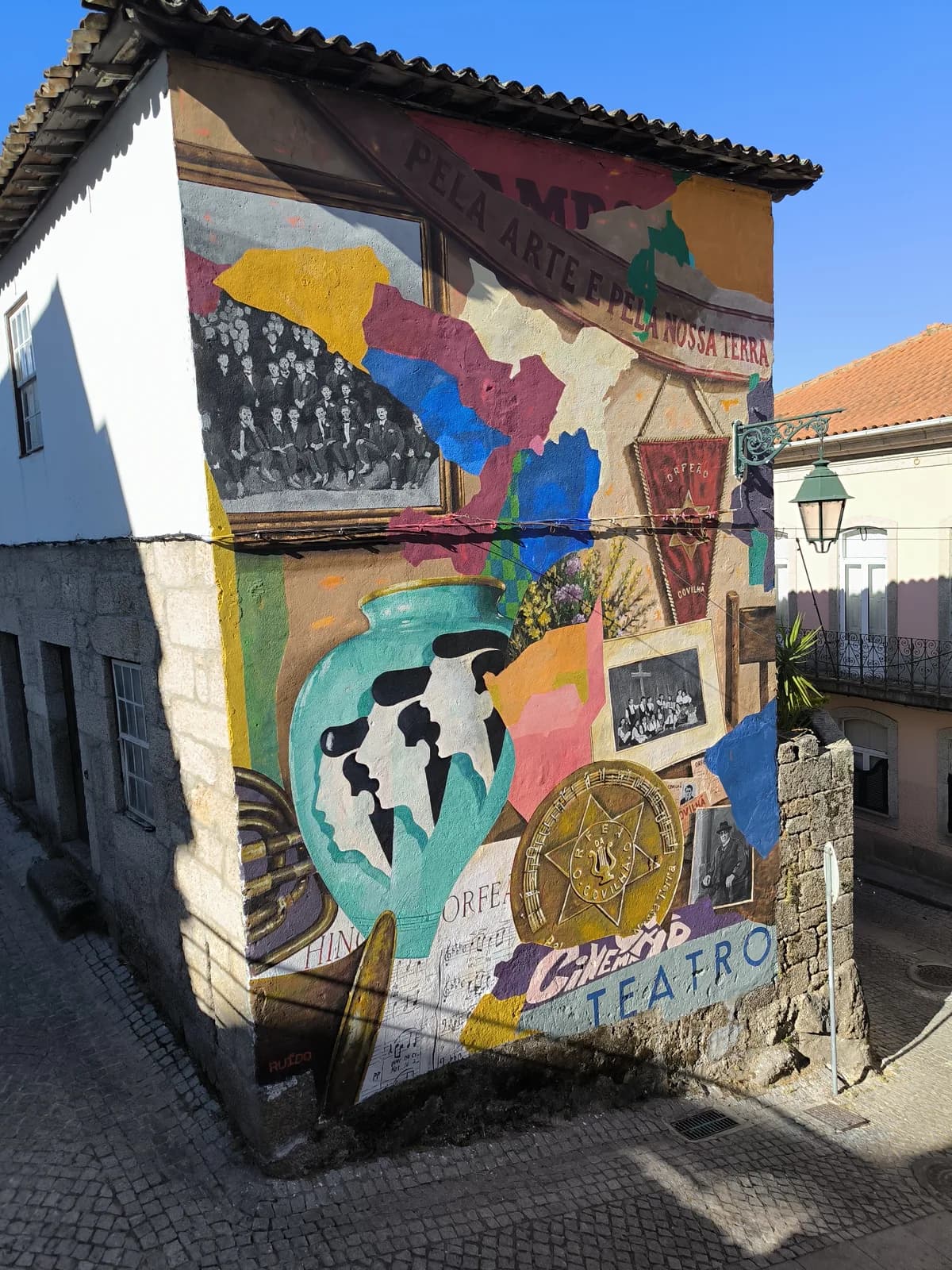
In Covilhã they painted the Orfeão da Covilhã house in 2026, collaged from the choral society's own archive, and — in 2022 — A Serra e a Neve, which no longer stands.
A corner house covered in the history of the Orfeão da Covilhã choral society, collaged from its own archive: a framed group portrait, the society's pennant and medal, a horn, a sheet of manuscript, and the motto pela arte e pela nossa terra running across the top.
Good condition
Mural #10 of the Murais de Liberdade route, on radio and the coup. Two broadcasts carried the signals that started it — Paulo de Carvalho's E Depois do Adeus on Emissores Associados de Lisboa, then Grândola, Vila Morena on Rádio Renascença at twenty past midnight — and the mural takes the transmitter as the instrument of the revolution.
Good condition
Mural #12 of the Murais de Liberdade route, and one of two the project took to the Azores. Its subject is the summer that followed the coup — the street celebration, the improvised assemblies and the sheer noise of a country that had just stopped being quiet.
Good condition
Mural #2 of the Murais de Liberdade route, on censorship and its end. The lápis azul — the blue pencil the Estado Novo's censors struck copy out with — is answered in a town whose industrial-tourism circuit runs through the Viarco pencil factory, which has been making pencils there since 1907.
Good condition
Mural #3 of the Murais de Liberdade route, unveiled in the Baixa of Coimbra in November 2024. Its subject is the student movement and the protest song that came out of it — the academic crises of the 1960s, and the Coimbra guitar in the hands of people using it as an argument.
Good condition
Mural #8 of the Murais de Liberdade route, on the western facade of the former Escola n.º 2 in Lagos. Its subject is the constituent assembly election of 25 April 1975 — the first free vote in Portugal in half a century, held exactly a year after the coup, with a turnout above ninety per cent.
Good condition
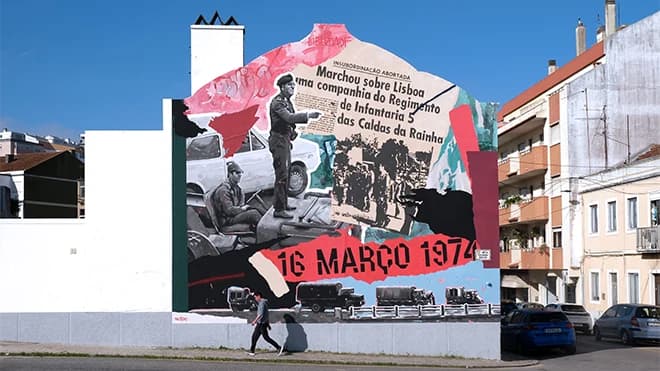
Mural #4 on the Murais de Liberdade route, painted in 2024 for the fiftieth anniversary of the revolution. It marks 16 March 1974, when officers of the Regimento de Infantaria 5 marched out of Caldas da Rainha on Lisbon and failed, five weeks before the rising that ended the dictatorship. The wall carries the date and the newspaper front page that reported the column.
Good condition
A WOOL 2022 mural collaging archival photographs of ski competitions in the Serra da Estrela with the graphic language of period tourism posters.
Removed
Select a pin to see the details here.
Are you an artist or organizing events?
Join BeThereGo.com and reach people looking for culture around the world.
Click here for more information.