 (alpha)
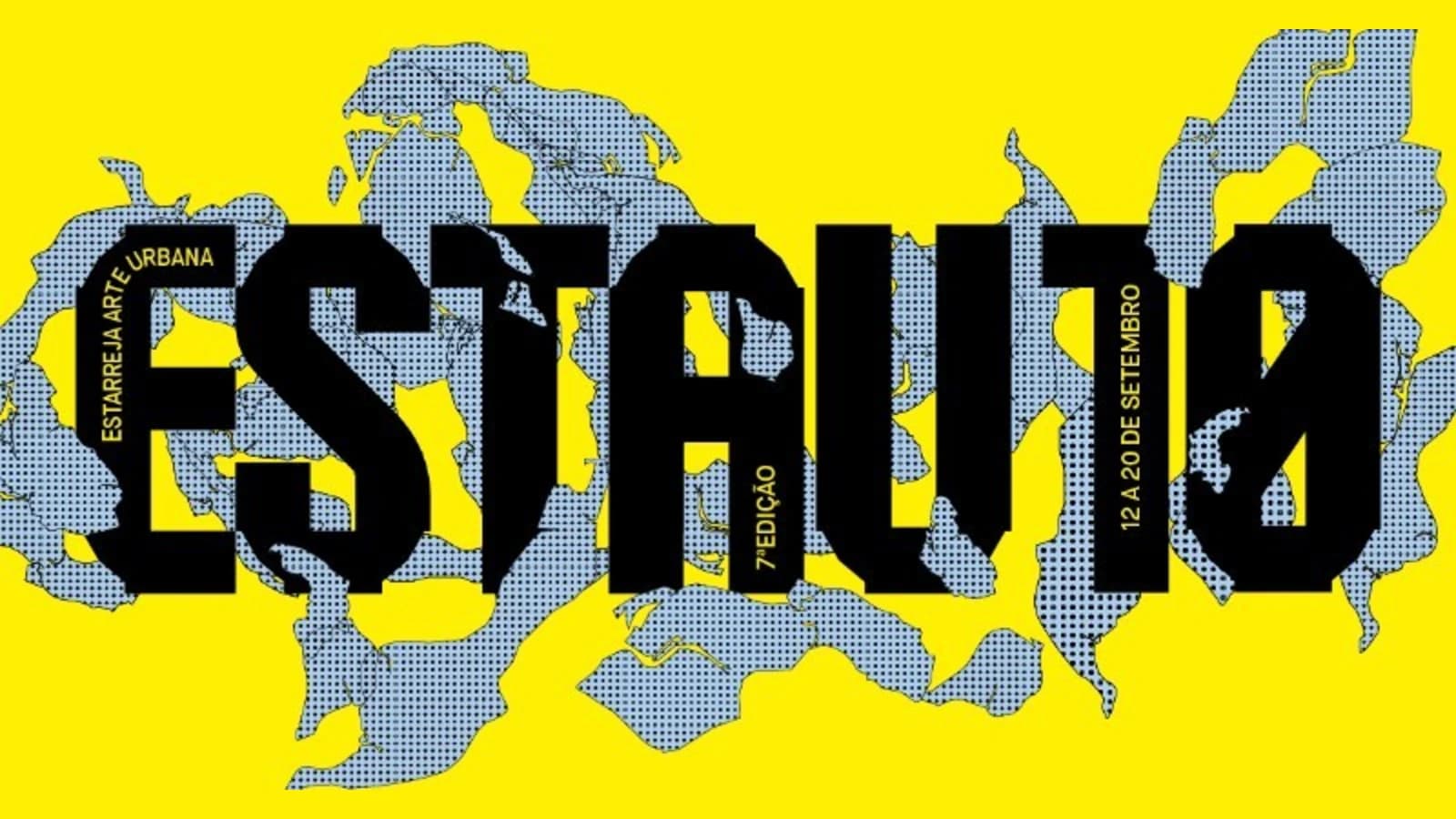
ESTAU turns ten, and Estarreja counts a hundred works
Estarreja's urban art festival runs 12 to 20 September, a decade after it started. Ten artists are painting, and the town's permanent collection is already close to a hundred pieces.
Lisbon, Portugal
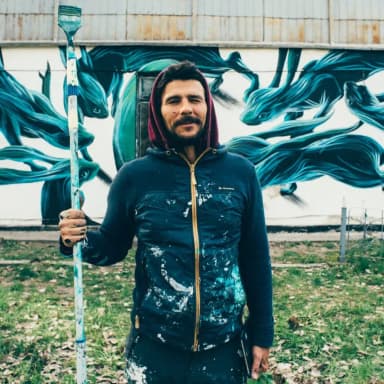
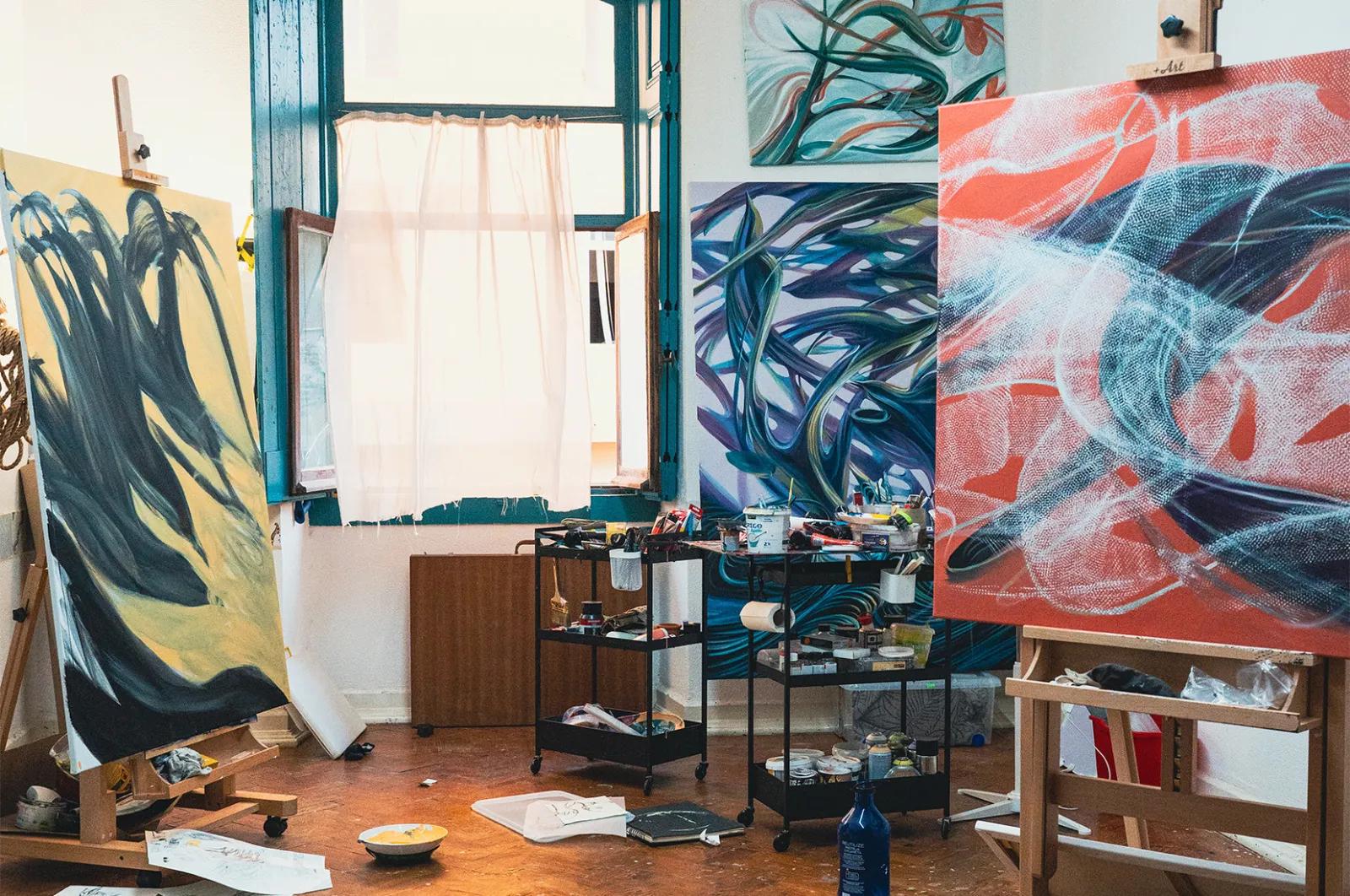
Pantónio is the working name of António Correia, a painter born in 1975 on Terceira, in the Azores. His walls are crowded with animals: shoals of fish, hares at full stretch, flocks of swallows, all drawn in long continuous strokes so that the whole wall seems to move at once. The colours rarely go far beyond black, white and blue, which his galleries read as the volcanic rock and the Atlantic of the island he grew up on.
He came to it after another career. Until around 2011 he worked in advertising, as an illustrator, animator and art director. "It's pure drawing, it isn't street art," he told Público's P3 in 2013, already wary of the label.
Lisbon first knew him for something smaller than a wall. When the troika arrived in 2011, he began altering the city's road signs, using the blank space on them to send traffic somewhere else. P3 described arrows on Avenida da Liberdade pointing the way to the IMF, and a map of Portugal turned upside down. Three years later, Mutante was still introducing him as the Azorean who had changed Lisbon's signs.
The big walls came soon after. In May 2014 he painted a whirl of fish up the side of a tower on Place de Vénétie, in the 13th arrondissement of Paris, for Galerie Itinerrance's Street Art 13 route: more than 60 metres of it, billed at the time as the largest mural in Europe. In the gallery's press kit he said the building itself gave him the image. Thousands of people lead ordinary lives in it, and a whirlpool of fish seemed the right metaphor.
In August 2015 he covered a sixteen storey block on what is now Beresteiskyi Avenue, in the Sviatoshyn district of Kyiv, with swallows and hares. When Itinerrance gave him his second Paris solo show in 2017, he called it Atlantide, and told the Portuguese news agency Lusa, as DN reported, that the name came from his tie to the Azores. Of the animals, he said: "They all come from the sea."
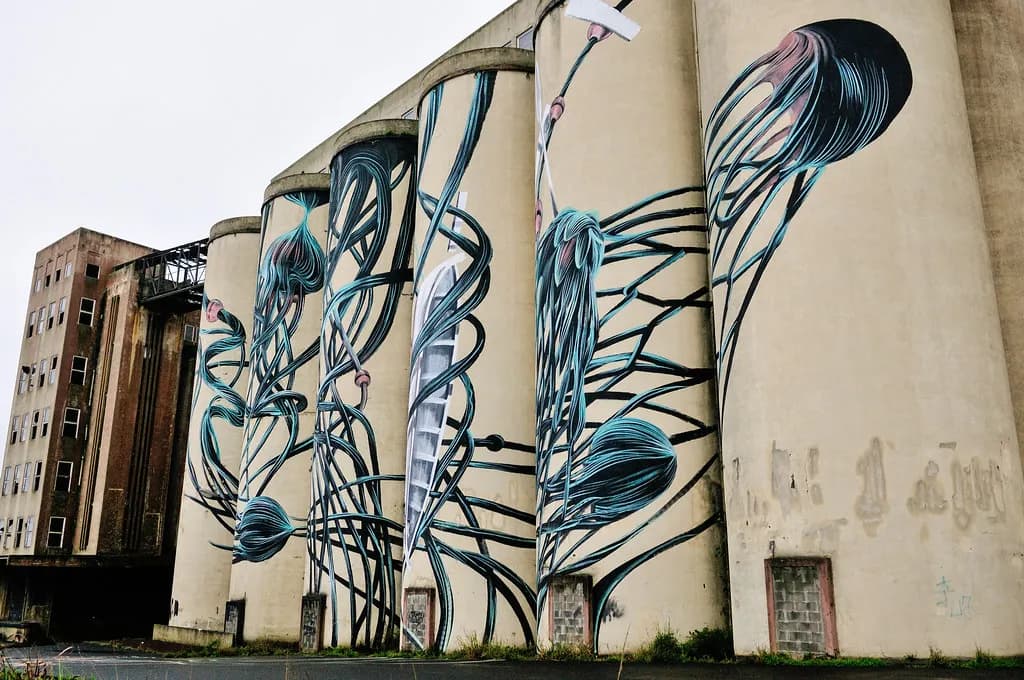
He had already taken them home. In September 2016, for the Walk & Talk festival, he painted the abandoned silos of Angra do Heroísmo, on Terceira. According to Tanna Schumacher Duran's short film of the work, he asked the neighbours what he should paint, and the answer that kept coming back was the things you no longer see.
The mainland walls follow the same instinct for the animals that already live in a place. In Covilhã, for an extra edition of the WOOL festival in October 2015, he painted the swifts that live in the town. In Estarreja, for ESTAU in September 2022, he swapped animals for trees on Avenida 25 de Abril, their leaves caught between falling and flying away. ESTAU has since turned ten.
In May 2016 he spent a residency at Casa da Cerca, the contemporary art centre in Almada, painting its outer walls. In December 2025 the council announced a new mural on those walls, by Tamara Alves.
Lisbon has very little of him left on its walls. Time Out Lisboa calls the one in Alta de Lisboa one of the few: swallows wheeling across four buildings that face a small square in the old Bairro da Cruz Vermelha, in Lumiar. He painted it in May 2019 for the MURO festival, which paired visual artists with musicians. His partner was the musician Surma.
Earlier Lisbon pieces were made to be temporary. In 2014 he sent a swarm of rabbits down the ramps of the underground car park at Amoreiras, which he told Brooklyn Street Art was a metaphor for how aggressive shoppers can get in cars and malls.
For Ser vivo, his show at Underdogs from 6 November to 31 December 2026, Time Out described new work on canvas and paper, hung along a route of curtains and niches that you bend through to find the animals. Underdogs is the Marvila gallery Vhils co-founded in 2010.
His prints are another way in. Os Ambiciosos is a screenprint he made with the Centro Português de Serigrafia, who filmed it.
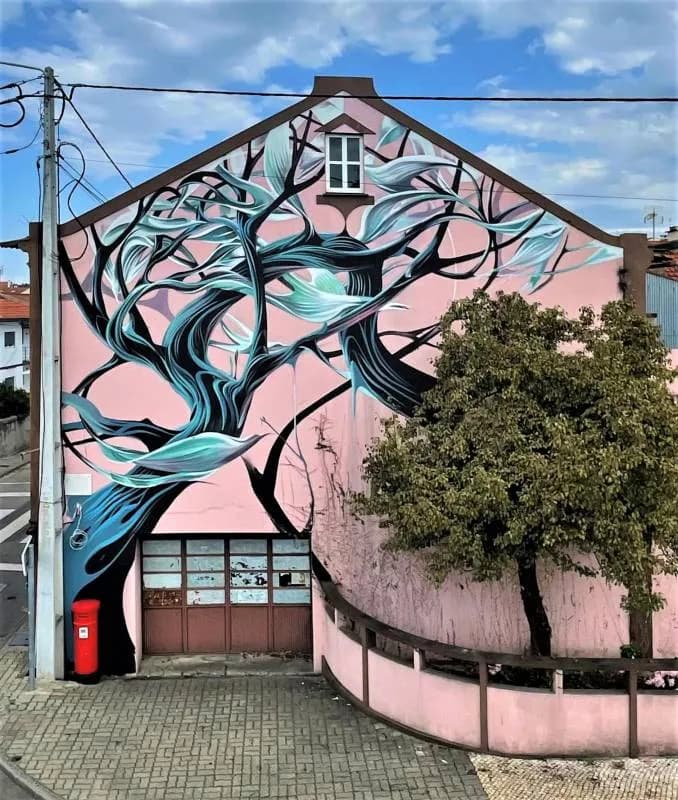
A mural created for the ESTAU festival in Estarreja depicting stylized trees transformed into Pantónio’s signature flowing, chimera-like forms. The work blends natural elements with his characteristic monochrome palette and expressive motion.
Preserved
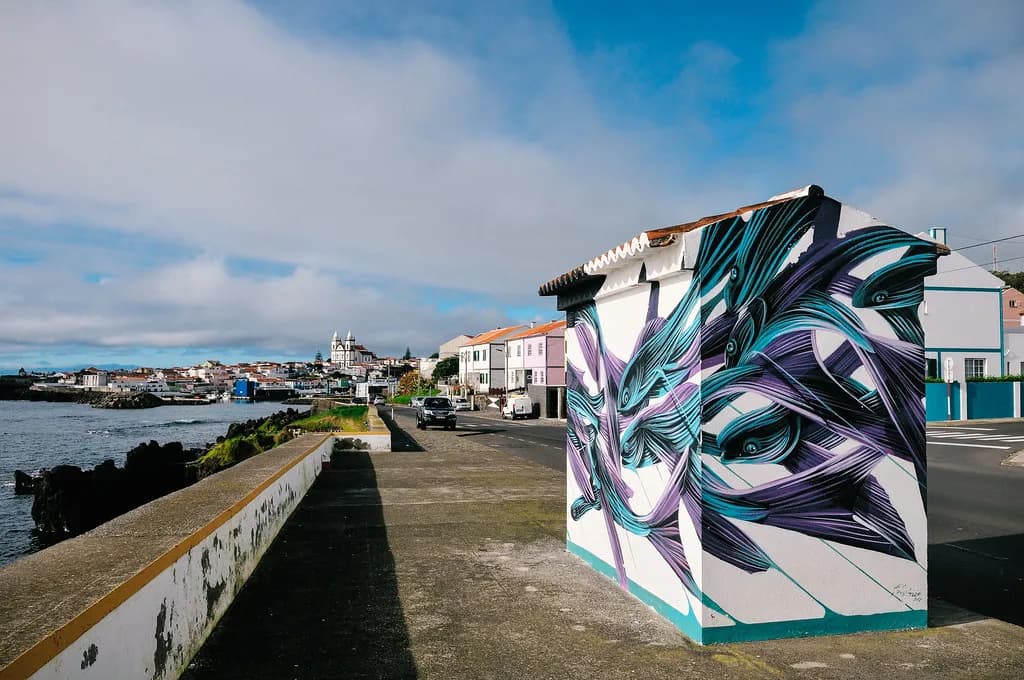
A 2017 Pantónio intervention transforming a local bus stop in São Mateus da Calheta into an immersive mural space featuring his signature flowing animal forms. Referenced in Gail at Large blog (2017): https://gailatlarge.com/blog/2017/12/21/65044.
Preserved
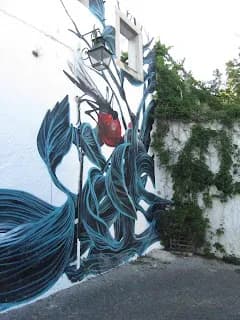
A mural on the outer walls of Casa da Cerca, the contemporary art centre in Almada, during Pantónio's residency there in May 2016. In December 2025 Almada council announced a new mural by Tamara Alves on the same outer walls, so whether this one survives is unconfirmed.
Condition unknown
A large mural created for the Walk & Talk festival on an abandoned silo building in Angra do Heroísmo. The work reflects Pantónio’s flowing animal forms applied to an industrial structure. Referenced in Gail at Large blog (2017): https://gailatlarge.com/blog/2017/12/21/65044.
Condition unknown
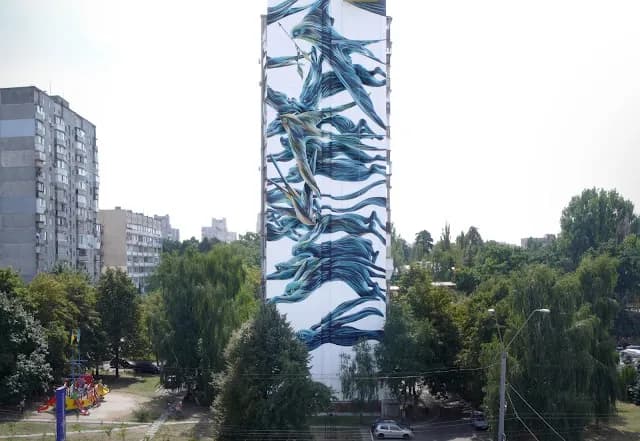
Swallows and hares across a sixteen storey block at Beresteiskyi Avenue 95 (Peremohy Avenue when it was painted), in the Sviatoshyn district of Kyiv. Pantónio painted it in August 2015 for a district mural programme, in his flowing black and white strokes. It was still documented in 2020; its current condition is unverified.
Condition unknown
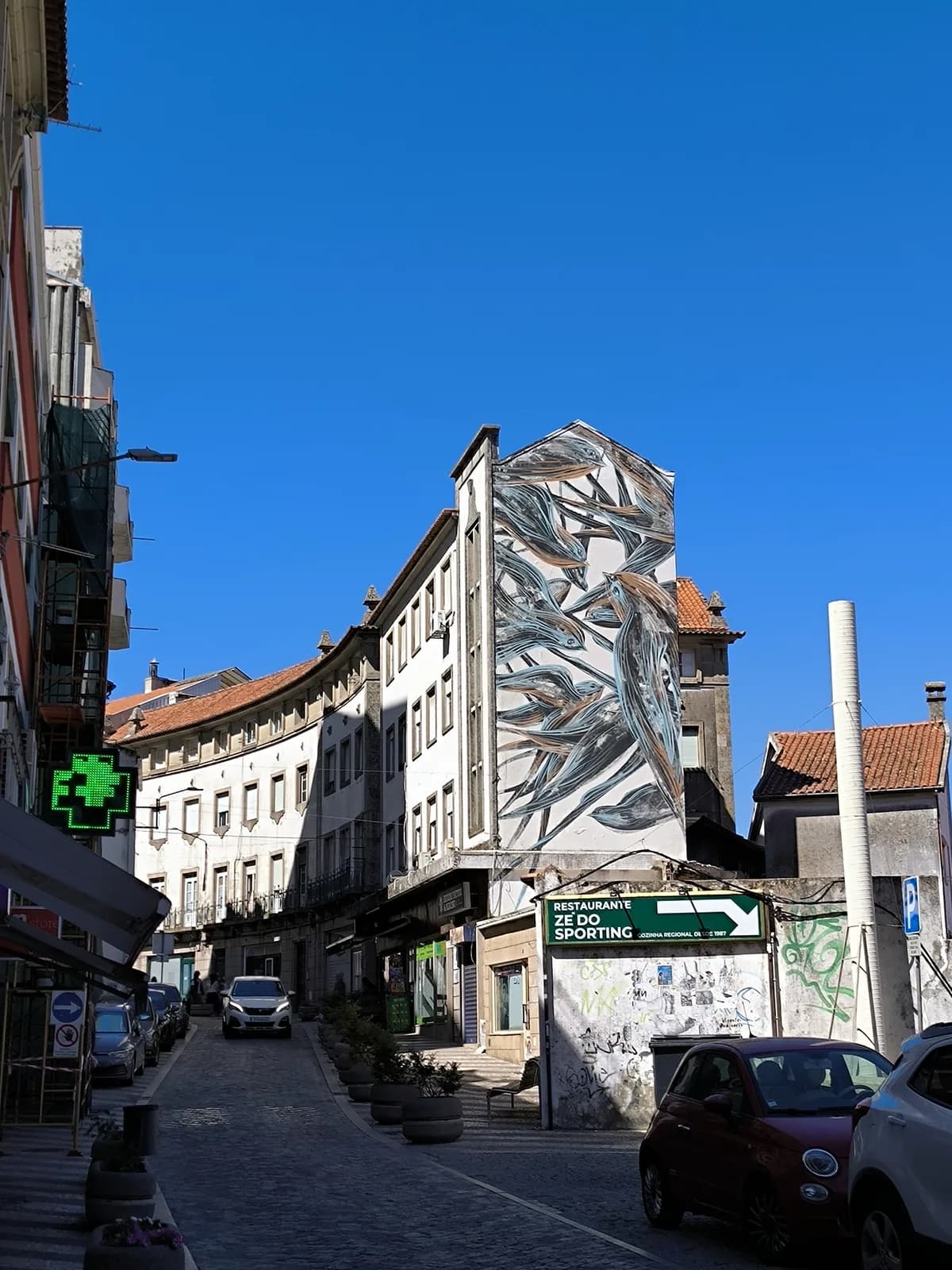
A mural created for the Wool Festival in Covilhã featuring Pantónio’s signature flowing brushstrokes and stylized bird figures, influenced by local culture and his recurring nautical and organic themes.
Preserved
A shoal of Pantónio's elongated fish climbing the full height of the Tour Sienne on Place de Vénétie, in the 13th arrondissement. At roughly 66 metres by 15 it was described on completion as the tallest mural in Europe, and it remains the anchor of the Boulevard Vincent Auriol open-air mural route curated from the neighbourhood below.
Condition unknown
Select a pin to see the details here.
Select a pin to see the details here.
Estarreja's urban art festival runs 12 to 20 September, a decade after it started. Ten artists are painting, and the town's permanent collection is already close to a hundred pieces.
Are you an artist or organizing events?
Join BeThereGo.com and reach people looking for culture around the world.
Click here for more information.